The telephone call that alters your week never comes to a practical time. It comes when your calendar is full, your phone is buzzing, and somebody nearby instantly falls down, chokes at a customer lunch, or cuts themselves severely on website. In those very first mins, nobody cares what your work title is. They care whether you can act.
That is where concentrated first aid and CPR training settles, especially when it respects how little leisure you have.
I have invested years instructing first aid and CPR courses to professionals who turn up in fits, scrubs, uniforms, or hi‑vis vests. A lot of them get here concerned concerning the time commitment. A lot of them leave claiming the very same point: "I want I had done this faster."
This post gathers what really matters for a hectic specialist picking a first aid and CPR course, exactly how fast or express formats work in method, and what you ought to insist on from any kind of first aid training provider.
Why first aid abilities matter more than your schedule
In an emergency, minutes matter greater than degrees, ranking, or salary.
Cardiac arrest uses the clearest example. Without CPR, survival stop by an approximated 7 to 10 percent for every single min that passes without reliable chest compressions and defibrillation. By the time emergency situation solutions fight through web traffic and building safety, those minutes are gone.
When I teach fast CPR courses in city offices, I frequently ask who has seen a real emergency. Hands go up: a coworker who collapsed in a conference, a moms and dad who choked at a restaurant, a building employee that fell from a ladder. The majority of those scenarios unfolded far from a medical facility however really near to a person who can have helped, if they had been trained.
For hectic professionals, the obstacle is hardly ever inspiration. It is time. That is why fast first aid training, express CPR courses, and mixed choices matter. The objective is not to transform you right into a paramedic. The goal is to offer you a sharp, reputable ability you can make use of in between the incident and the arrival of medical help.
What active professionals really need from a course
If you function long hours, travel frequently, or juggle meetings, you do not need a vast, academic program. You require a fast first aid course that is:
Focused on the emergency situations you are likely to see. A legal representative in a city office, a childcare worker, and a storehouse supervisor deal with different dangers. Express child care first aid courses, for instance, emphasise choking, fever, allergic reactions, drops, and play‑related injuries. A construction‑focused first aid course might lean harder on blood loss, fractures, crush injuries, and electric shocks.
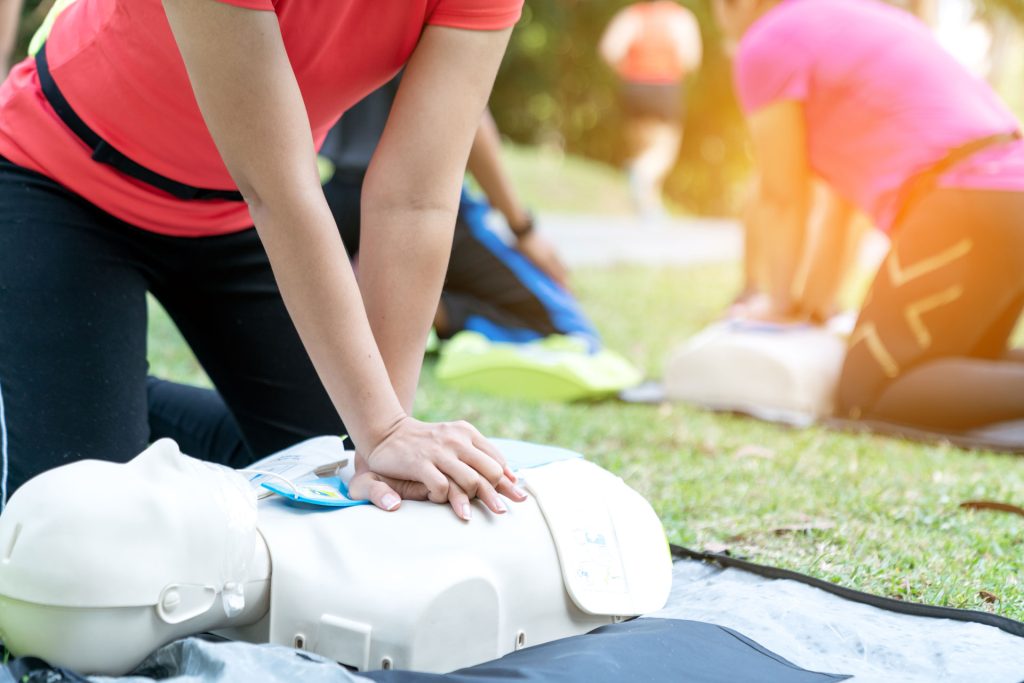
Built around technique, not lectures. Grownups learn physical skills through doing, not listening. Efficient first aid and CPR training classes maintain concept short and utilize the majority of the time for hands‑on work: compressions on CPR manikins, exercise with training AEDs, practicing exactly how to roll a person into the healing position, using injury dressings and slings.
Designed to fit tight routines. Fast first aid courses, express first aid classes, and combined formats (online plus short in‑person sessions) identify that you can not disappear from the workplace for numerous days. I have actually taught extremely reliable programs in 3 to 5 hours, offered pre‑course online components cover the basics.
Clear regarding certification. Numerous experts require a first aid certificate to meet workplace, industry, or regulatory requirements. A fast certification is fine, as long as it is identified and compliant. That could be a basic occupational first aid and CPR course, a FAP first aid kind program in some regions, or a childcare‑specific credential.
For elderly team, there is a 5th demand: trustworthiness. If you take care of individuals, lead groups, or host clients, having the ability to organize an emergency without panic lugs weight. People remember that progressed to help.
Core abilities you need to walk away with
Different carriers brand name their courses in different ways: first aid and CPR course, standard life assistance, express first aid and CPR, fast CPR correspondence course, and so forth. Names differ, however the important skill set ought to be surprisingly consistent.
Recognising a clinical emergency
Good first aid starts prior to you touch the casualty. You should learn to check swiftly and choose whether you are dealing with a minor injury, a time‑critical emergency situation, or a scenario where your own safety is at risk.
This consists of spotting heart attack indication, possible stroke, major trouble breathing, signs of cpr courses Gold Coast shock, and when hemorrhaging or burns first aid Cannon Hill are severe sufficient to be life‑threatening.
CPR and AED use
Every professional first aid and CPR training program must provide you positive, repeatable CPR abilities:
You learn how to inspect responsiveness, open up the air passage, assess breathing, and start chest compressions that are deep and fast enough to matter. You practice cycles of compressions and breaths, and you will likely be stunned by exactly how physically demanding correct CPR is.
You likewise practice with an automated exterior defibrillator, or AED. Modern AEDs are deliberately straightforward. During cpr training, you will see how to connect pads, comply with the motivates, clear others away during a shock, and return to compressions immediately. In numerous workplaces, shopping centers, fitness centers, and flight terminals, an AED is closer than people understand. Your work is to recognize exactly how to utilize it.
Managing choking
Choking happens in boardrooms, staff cooking areas, and childcare centres more frequently than individuals admit. On a fast first aid course, you ought to learn useful techniques for:
- Helping a responsive grownup or child who is choking, including back blows and stomach thrusts Modifying techniques for infants, particularly in an express child care first aid course Recognising when someone is coughing properly and when they remain in actual danger
This is among the situations where also a brief, express first aid course can absolutely alter an outcome. The methods are straightforward, but they have to be exercised, not simply described.
Bleeding, wounds, and shock
Modern first aid courses put restored emphasis on serious bleeding. You must learn how to apply straight pressure, usage dressings and bandages, improvise when materials are limited, and recognise internal blood loss and shock.
For active specialists in environments with tools, cars, or storage facility operations, this component of first aid training is not optional. An express first aid training provider must still designate adequate time for hands‑on bandaging and reasonable scenarios.
Unresponsive but breathing: recovery setting and monitoring
Not every collapse requires CPR. If someone is less competent but still breathing, securing their airway becomes the concern. An experienced first aid and CPR course shows you how to roll someone into a steady side placement and just how to keep track of breathing up until aid arrives.
This is where several fast first aid courses reduced corners, and it receives the field. Rolling an individual safely, specifically a bigger adult, is a functional skill. It needs a little technique and method, not just enjoying a video.
Are fast and express courses "adequate"?
Many specialists approach a fast first aid course near me with suspicion. "If it is that brief, is it thinned down?" The straightforward response is: it depends that is running it, and just how they structure it.
Short courses can be superior when:
They usage pre‑course online discovering to cover concept. Participants full first aid essentials, CPR principles, and legal considerations at their very own rate. The in‑person session then focuses on application and practice.
Group sizes are managed. You can not exercise CPR effectively in a team of 30 people with 2 manikins, despite how experienced the trainer is. Good express cpr training restrictions numbers or products enough equipment.
Scenarios are sensible and pressed. As opposed to long talks concerning every condition under the sun, a fast first aid course drops you right into real‑world circumstances: a co‑worker with upper body discomfort in a conference room, a child with an allergic reaction on a play ground, an employee who slips, strikes their head, and comes to be confused.
Where fast CPR courses or express first aid courses stop working is when they compromise method for rate or advertising. If participants leave without sore arms from compressions, without ever making use of a training AED, or without taking care of a bandage, the course was too fast.
When you examine fast first aid training or express cpr courses, look much less at the advertised duration and more at the equilibrium of hands‑on technique to theory, and the capability of the trainer.
How to select the right first aid and CPR training provider
Picking a carrier commonly seems like contrasting comparable pamphlets with different logos. It pays to look beyond the branding and ask concrete inquiries. The list below shows what I suggest corporate customers that desire reliable first aid and CPR courses for their staff.
Accreditation and recognition
Inspect that the first aid courses lead to a first aid certificate recognised by your regional regulatory authority, sector body, or insurance firm. Sector‑specific choices, such as express child care first aid courses, need to satisfy child care guidelines, not just generic standards.Content suitable for your risks
An office‑based group might not need prolonged components on outdoor survival, yet they do require solid CPR training, AED practice, choking monitoring, and response to cardiac arrest and strokes. Childcare specialists require express child care first aid training that emphasises paediatric CPR, choking in infants, high temperature, seizures, and sensitive reactions.Format and timing
If your group is spread across places or works shifts, combined learning or numerous brief express first aid sessions might be much more sensible than a solitary lengthy day. Ask specifically whether they supply express first aid course or express cpr course choices that can run early, late, or during lunch windows.Instructor experience
There is a distinction in between somebody who can recite the guidebook and somebody who has actually functioned actual emergencies. Ask that will really teach your fast first aid course. Much of the best instructors have histories in paramedicine, nursing, firefighting, or safety monitoring, incorporated with solid training skills.Practice ratio
Try to find suppliers that commit to purposeful method time. For a combined first aid and cpr course, you ought to anticipate considerable hands‑on work, not simply presentations. If you listen to that a lot of the time is spent on slides, maintain looking.If a company bristles when you ask detailed inquiries, that itself is an answer.
What a focused session really really feels like
People often ask what a half‑day fast first aid course with CPR training looks like in reality. A common layout I teach for office‑based experts runs for regarding four hours of contact time, plus pre‑course online modules.
Before arrival, participants finish a brief online structure covering basic first aid principles, lawful and workplace obligations, infection control, and an introduction of CPR and AED usage. It usually takes under an hour.

The in‑person session starts with a fast evaluation of that on-line material, after that jumps directly into practical evaluation of an unresponsive casualty, respiratory tract management, and acknowledgment of heart attack. I put manikins on the floor early. Participants practice compressions, rescue breaths if needed by the curriculum, and operate in sets to utilize a training AED.
After a time-out, we relocate into choking, severe bleeding, and medical emergencies like cardiac arrest and stroke. Rather than long talks, I run short situations: "You are in a conference, and your customer clutches their breast and looks pale. Talk me via what you see, assume, and do." Every circumstance ends with a debrief connecting the experience back to clear, memorable steps.
By completion, individuals have actually performed loads of collections of compressions, made use of AEDs several times, rolled each various other right into the recuperation position, and took care of bandages and slings. They entrust to a first aid certificate, yet a lot more importantly, with the muscular tissue memory and decision‑making self-confidence they did not have at 9am.
That is the common you must expect, also from fast first aid courses or express cpr courses.
Online, combined, or classroom: which format works best?
Technology has changed exactly how https://privatebin.net/?a77177e40da6b8be#yFRs1Bz2F5EWsrDjMKuHtjNdmUMGEp6ZUBdV1XdqcK8 first aid and CPR courses are supplied. For busy professionals, this can be a blessing if made use of wisely.
Purely on the internet first aid courses work for understanding training yet have clear restrictions. You can not learn the feeling of breast compressions, the pressure called for to clear an airway, or the skill of rolling somebody safely by enjoying a screen. For any type of course that assures a comprehensive first aid and CPR certificate, there should be a hands‑on component.
Blended learning incorporates online modules with shorter in‑person practice. This is where fast first aid training radiates. You deal with expertise and theory at your very own speed, then use precious face‑to‑face time for functional work, inquiries, and situations. Several fast cpr correspondence course programs currently follow this model, which is perfect for recertification when your fundamentals are already strong.
Traditional classroom courses still have a place, specifically for high‑risk markets or sophisticated levels like occupational or office first aid where expanded scenarios and more complex skills are needed. For small groups or tight routines, however, a half‑day express first aid training block plus an evening of on the internet components is often simpler to arrange than a full day off the floor.
One useful idea: whatever format you pick, safeguard the time. If your phone gets on the table and your inbox is open, your brain will not inscribe the abilities as well. Genuine emergency situations demand your full interest. Training ought to too.
A basic mental checklist for real emergencies
In course, people fret about remembering lengthy methods. In truth, what you require is an easy, reliable mental checklist that you can remember under stress. Various organisations use various acronyms, yet the spirit is similar. Here is a simple variation I show that fits well with fast first aid and cpr training classes:
Safety
Check your very own security first. Try to find web traffic, power, sharp things, fire, or aggressiveness. Do not end up being a second casualty.Response
Speak with the person, touch their shoulder, and see if they react. If there is no response, ask for help.Airway and breathing
Delicately open the respiratory tract, look and pay attention for normal breathing, and enjoy the breast. Make a decision: breathing normally, or not?Call and send
If breathing is not normal, call emergency situation services or straight someone by name to do it, and send out somebody for an AED if available.Act
Begin CPR if suggested, deal with life‑threatening blood loss, or position the person in the recuperation position if they are taking a breath yet less competent. Continue up until help gets here or the individual recovers.Practicing this series throughout express cpr courses or a full first aid and CPR course makes it acquired behavior. When thirty people are screaming, alarms are sounding, and your heart rate climbs up, you fall back on what you have actually rehearsed.
Keeping skills sharp when you are busy
Skills fade. That is not a criticism, it is simple neuroscience. If you attend a fast first aid course today and never ever think about CPR once again, you will feel rustic in a year.
Most first aid certificates remain valid for 2 to 3 years, yet many organisations highly recommend more regular CPR refresher courses. That is where fast cpr and express cpr training options issue. A concentrated, 1 to 2 hour fast cpr refresher course every one year can maintain your capability high without ravaging your schedule.
Between official first aid and cpr courses, you can maintain abilities alive with short, low‑effort practices:
Visualise. Every so often, when you pass the workplace cooking area, ask yourself quietly, "If someone choked below, what would I do first?" That psychological rehearsal strengthens recall.
Check AED locations. Throughout a fire drill, staff rundown, or even a quiet moment, remember of where the closest AED is, just how to access it, and whether it appears preserved. If you can not locate one, raise the issue.
Review a fast card. Some offices problem pocket cards or lanyard overviews summing up CPR steps and emergency situation numbers. Maintain one on your ID badge and check it occasionally.
Volunteer as an assigned first aider. Many organisations officially designate initial aiders to floorings or groups. It generally comes with targeted first aid training and makes sure a person in each location takes ownership of readiness.
These little actions cost minutes monthly but mean that when your following express first aid course or fast cpr refresher rolls around, you are including layers of self-confidence rather than starting from zero.
Tailoring courses to details roles
Not every active professional requirements the same first aid device set. Selecting the right first aid training suggests looking truthfully at your environment.
Childcare specialists and teachers take advantage of express childcare first aid courses that stress paediatric problems. They need to practice infant CPR, administration of febrile seizures, play area injuries, and recognition of significant youth illnesses. Express childcare first aid training can frequently be structured around centre hours, with night or weekend break options.
Managers, HR specialists, and team leaders are frequently the ones individuals want to when something goes wrong. For them, a strong first aid and CPR course issues, but so does training on coordination: delegating jobs, managing crowds, communicating with emergency solutions, and supporting colleagues after a distressing incident.
Remote employees and constant travellers have one-of-a-kind requirements as well. A salesperson when traveling might require a compact first aid package in their vehicle and a solid grounding in what to do when expert assistance is more than a few minutes away. Some providers offer express first aid courses tailored to take a trip threats, including what details to provide emergency responders when you are alone.
For high‑risk sectors such as production, logistics, or field service, general fast first aid courses may not be enough. Expanded job-related first aid and cpr training classes that cover crush injuries, chemical exposure, constrained areas, and multi‑casualty scenarios might deserve the bigger time investment.
The point is not to chase after every certification imaginable. It is to match the level and emphasis of your first aid courses to the method you actually live and work.
Taking the next action without overthinking it
Many professionals postpone first aid training because they are waiting on a quieter week. Those weeks hardly ever arrive. The truth is that a well‑run express first aid course or fast first aid course requires much less time than lots of people think, specifically with combined styles and on‑site sessions.
When you search for a fast first aid course near me or compare express cpr courses, utilize clear criteria: real certification, strong useful focus, teachers with area experience, and a layout that values your time while still providing sufficient technique to develop muscular tissue memory.
The reward is not just a first aid certificate holding on a wall surface. It is the capacity to stay tranquil when something frightening happens before you, to take helpful activity prior to specialists show up, and to recognize that when someone required aid, you did not stand on the sidelines.
Busy schedules are genuine. So are emergencies. A very carefully selected first aid and CPR course is exactly how you bridge the space between them.